
A research group specialising in hapten chemistry, antibody production and immunoanalytical tools for food safety, environmental and clinical applications.
RESOURCES
Knowledge
The technology platform that underpins our research — from hapten design and antibody production to immunoassay development and validation for food safety, environmental and clinical applications.

TECHNOLOGY
Hapten design:
the key to antibody specificity
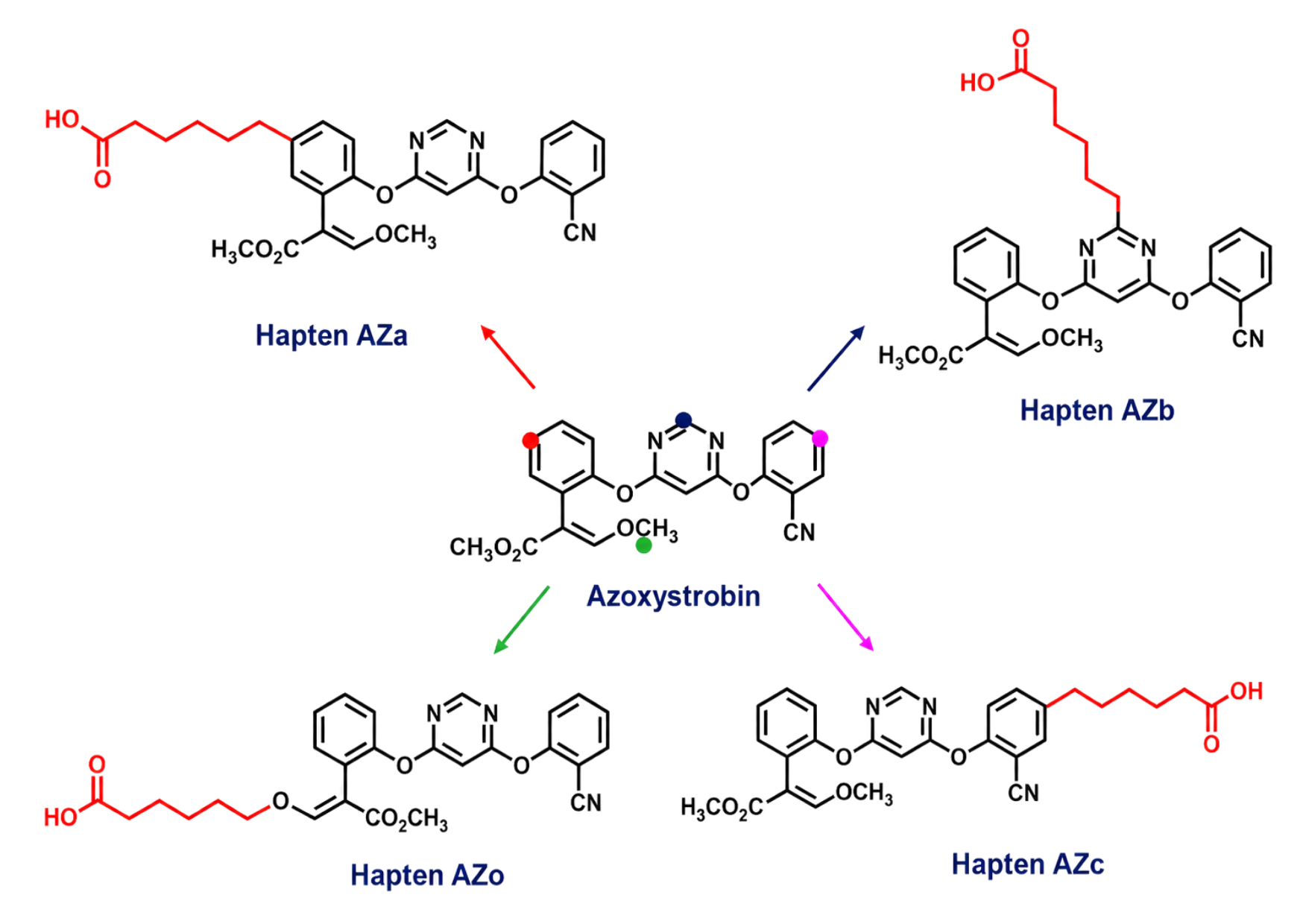
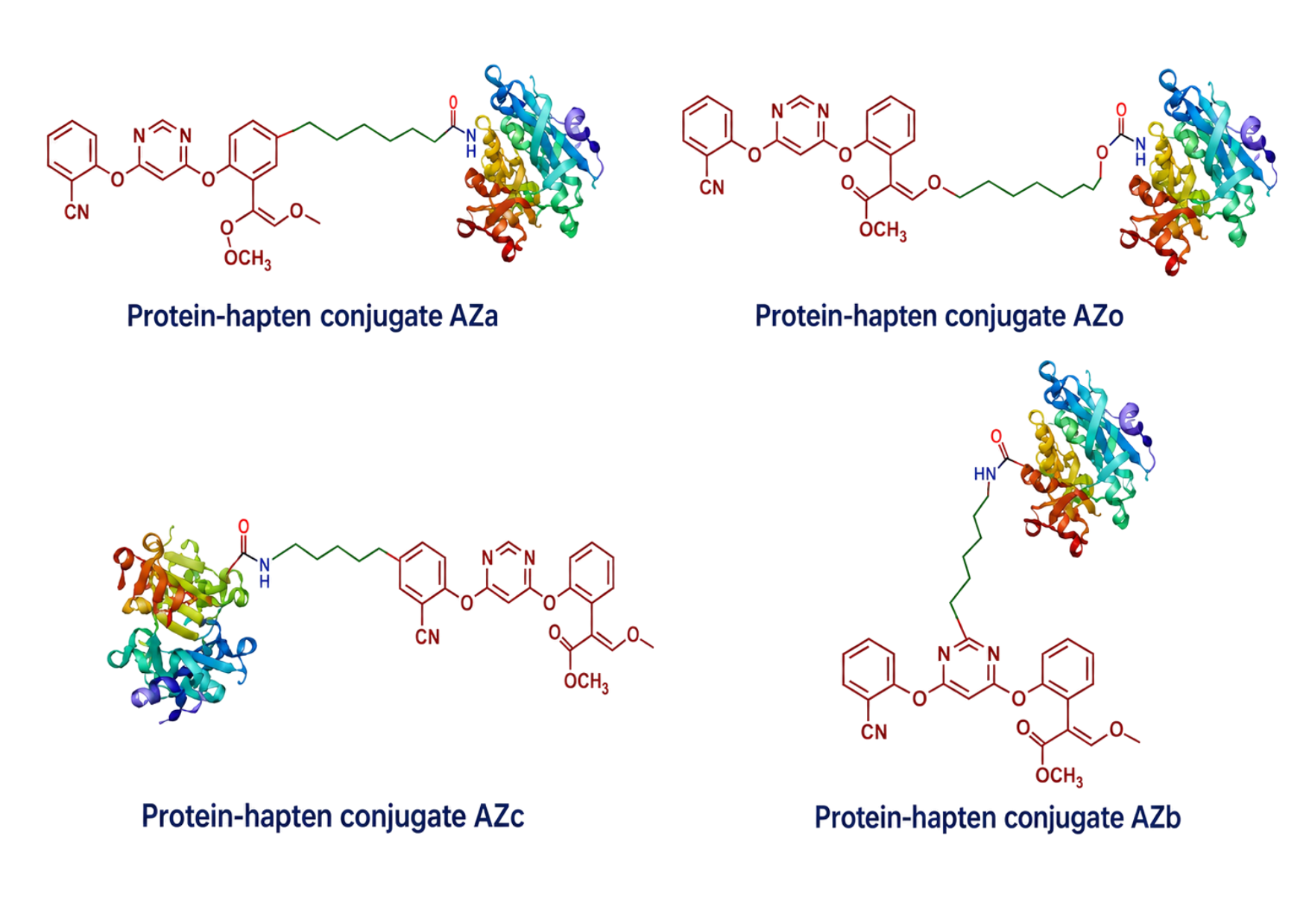
A hapten is a small molecule that cannot by itself elicit an immune response, but can do so when conjugated to a large carrier protein. The design of the hapten is the most critical step in the development of specific antibodies against small molecules.
Our approach to hapten design takes into account:
- The structural features of the target analyte that should be recognised by the antibody (the “antigenic determinant”).
- The position of the linker arm— attached to a part of the molecule that is not essential for antibody recognition.
- The length and chemistry of the spacer between the hapten and the carrier protein.
- The need to avoid cross-reactivity with structurally related compounds when selectivity is required — or to exploit it for broad-spectrum antibodies.
We use molecular modelling tools to predict hapten–antibody interactions and guide our design before synthesis, which significantly improves success rates compared to empirical approaches.
STRUCTURAL FIDELITY
The hapten must faithfully represent the structural features of the target analyte that will be recognised by the immune system.
LINKER POSITION
The point of attachment to the carrier protein must not mask the epitope. Distal attachment from key functional groups is preferred.
COUPLING CHEMISTRY
Length and composition of the spacer, plus the reactive functional group for covalent conjugation to the carrier protein, are key design variables.
CARRIER PROTEIN
BSA (immunogen), OVA or KLH (coating antigen). Heterologous conjugates improve ELISA sensitivity.
HETEROLOGIES
Using different carrier proteins for the immunogen and the coating antigen reduces matrix effects and improves assay sensitivity.
TECHNOLOGY
Antibody production
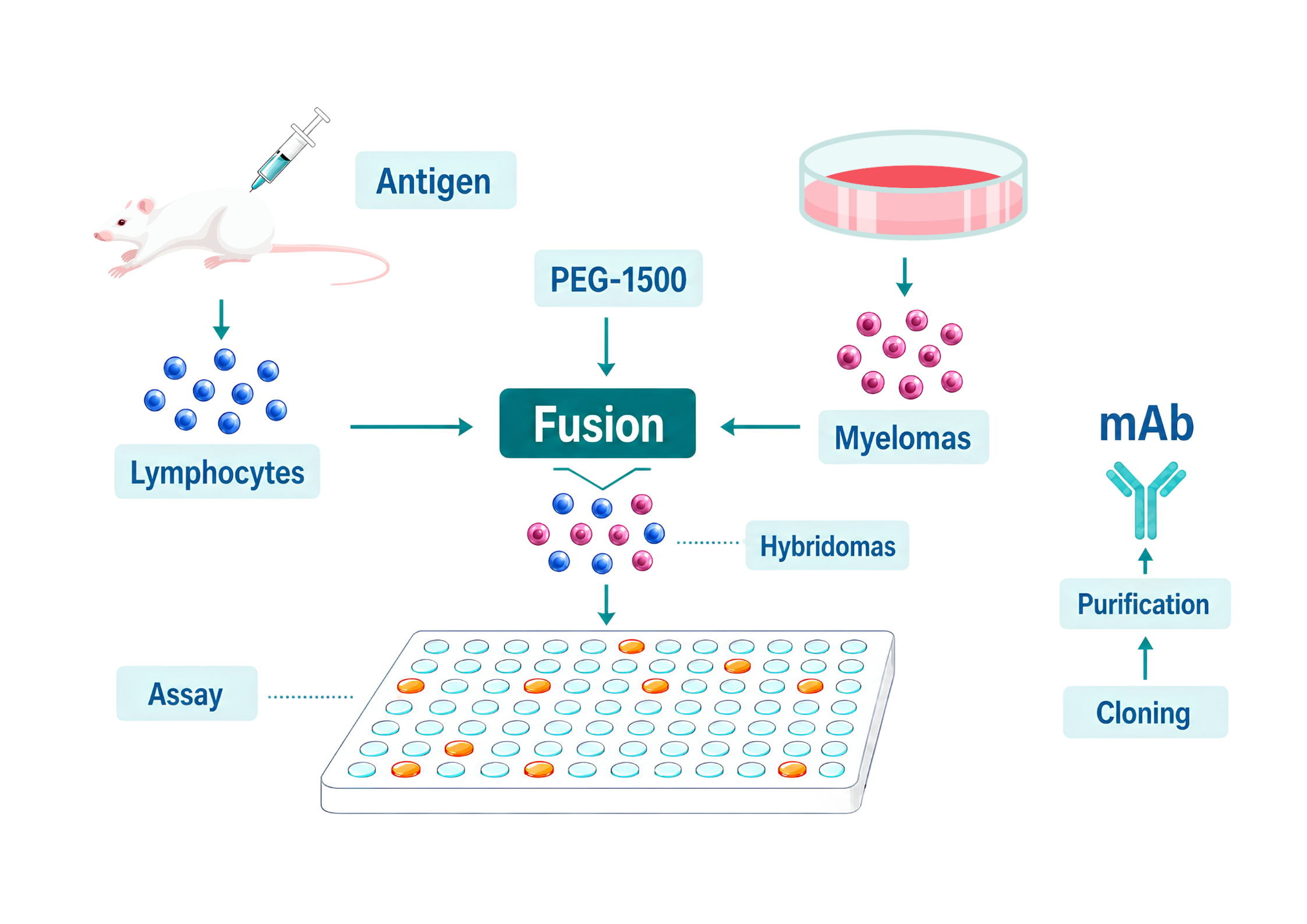
We produce antibodies tailored to each analytical application. Monoclonal antibodies are generated by hybridoma technology — immunised mice splenocytes are fused with myeloma cells, screened by ELISA and subcloned by limiting dilution, yielding antibodies with defined affinity, selectivity and high batch-to-batch consistency. Polyclonal antibodies are raised in rabbits or guinea pigs and affinity-purified from serum; they are particularly useful for assays requiring high titre. Where applicable we also work with recombinant antibodies for enhanced stability and scalability.
TECHNOLOGY
Immunoassay formats
ELISA
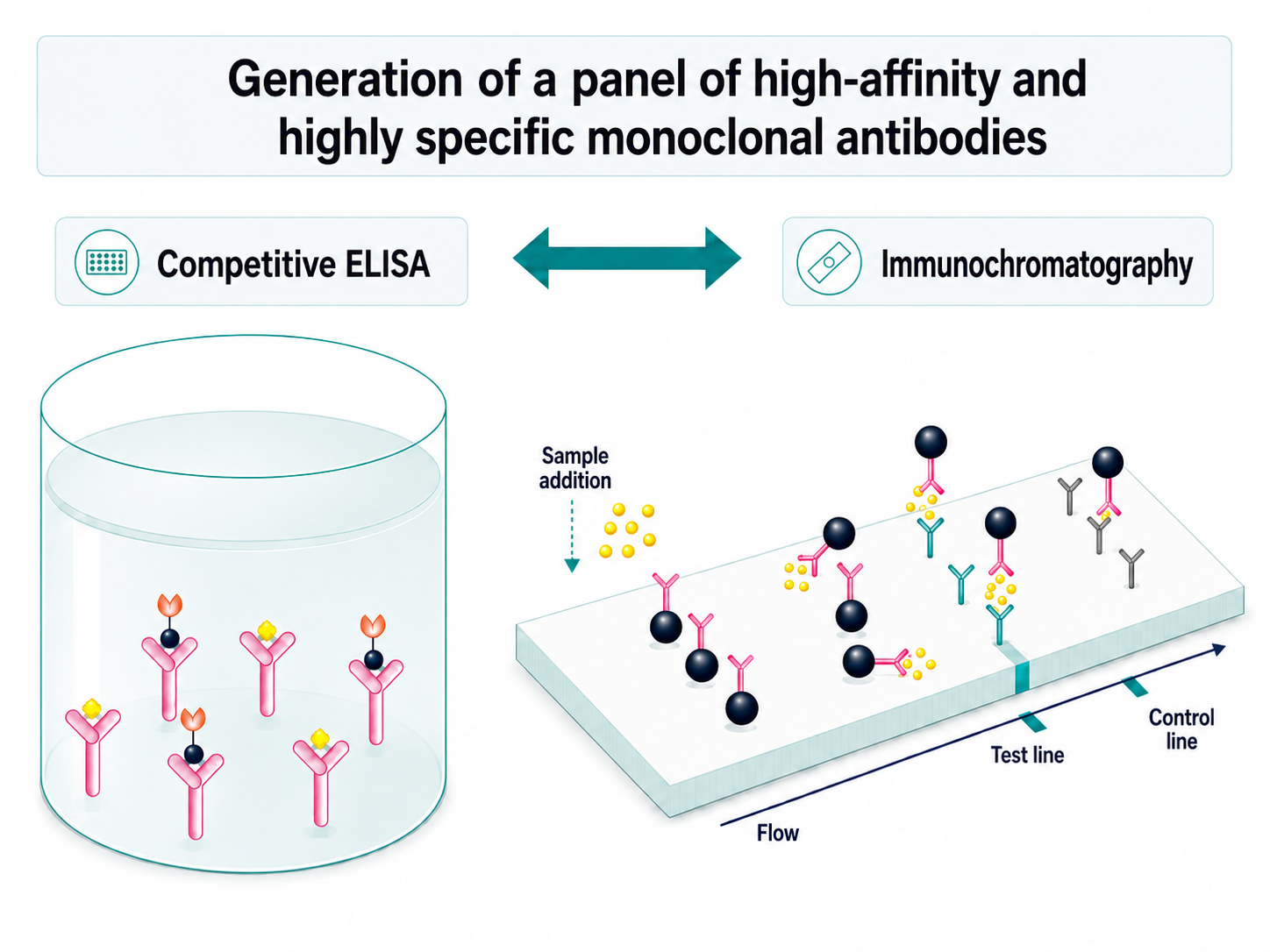
Enzyme-Linked Immunosorbent Assay in indirect competitive format. Detection limits typically in the 0.01–10 ng/mL range. Validated for multiple matrices including food, water, urine, serum and environmental samples.
Lateral Flow (LFIA)
Rapid, single-use strips for on-site qualitative or semi-quantitative detection. Results in 5–15 minutes with no instrumentation. We develop colloidal-gold and fluorescent formats, including multiplex strips for simultaneous detection.
Biosensors
We integrate our antibodies with electrochemical (screen-printed carbon electrodes), optical (SPR, fluorescence) and piezoelectric (QCM) transducers to develop biosensor platforms for continuous or near-continuous monitoring.
VALIDATION APPROACH
All immunoassays developed in the group are validated following internationally recognised performance criteria and guidelines, including AOAC, ICH and, where applicable, Commission Implementing Regulation (EU) 2021/808. For methods intended for regulatory use or technology transfer, we also apply inter-laboratory validation approaches.